How to Upload Apk File to Android Developer
Become Up to Android Mobile Application Evolution
This topic describes the steps necessary to upload an application to Google Play, the Google store for Android applications.
Contents
- 1 Prerequisites
- 2 Submitting Your Awarding
- iii Android App Packet Back up
- iii.1 Sharing APK's though App Bundle
- 4 Come across Too
Prerequisites
Earlier you tin can upload your application to Google Play, you must:
- Have a Google Play programmer account. If y'all do not have one, create ane; information technology requires a one-fourth dimension payment of $25 to Google.
- Prepare your application for deployment.
Warning: Never lose the keystore file that you lot configre at Project > Options > Provisioning or forget its password. Any afterwards updates of your awarding must be signed with the aforementioned keystore file and keystOre alias, otherwise Google Play does not let you lot upload any update, and forces you to create a unlike awarding instead, with a different package ID, which means that your users cannot upgrade automatically.
- Build a signed awarding package that you tin can upload to Google Play.
Submitting Your Application
To submit your Android application to Google Play:
- Log into the Google Play Developer Console.
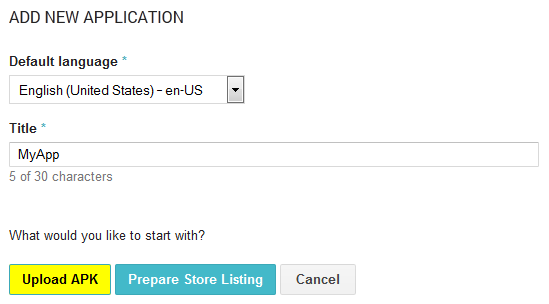
- Select Add new application.
-
- On the dialog box that appears, select the default language of your application, the title of your application and select Upload APK.
-
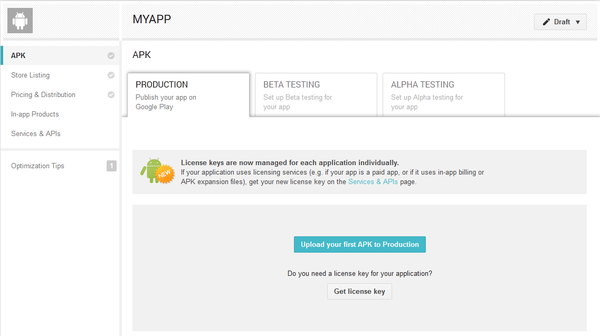
- You are taken to the APK page of your new application. Select Upload your outset APK file to Production on the heart of the screen (you can alternatively set up beta or alpha testing if you wish), and select the signed application package that you deployed.
-
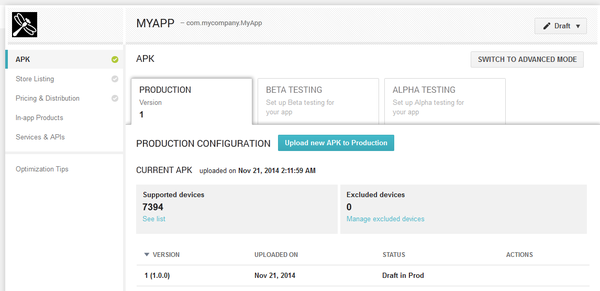
- When your package file finishes uploading, the Production tab shows information extracted from your package file, and the greyness check mark on the right-paw side of the APK tab becomes greenish:
-
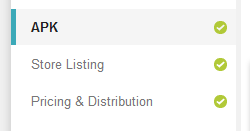
- Complete the mandatory information in the remaining tabs that show a gray check marking until they all show a dark-green check mark instead. Labels of mandatory fields are marked with an asterisk.
Annotation: You lot must click Salvage later on yous fill the fields of a tab so that the check marker of that tab turns green.
-
- Later on you have provided all the necessary data about your application on the Google Play Developer Console, on the page of your application, on the summit-right corner, select Prepare to publish > Publish this app .
-

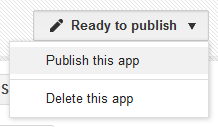
Your application is at present published.
Note: Information technology may accept several hours until it is really available through Google Play.
Android App Bundle Back up
RAD Studio supports Android App Bundle, the official, new, and recommended publishing format for Android applications.
This publishing format includes all of your Android applications compiled lawmaking and resources but defers the generation and signing of the APK to Google Play.
No code changes are required to take advantage of Android App Bundle back up in RAD Studio 10.3.three (Delphi personality).
Publishing an Android App Parcel allows Google Play to use the Dynamic Delivery awarding servicing model to generate and serve optimized APKs for each user's device configuration.
To generate an App Bundle follow these steps:
- Open your awarding's project.
- Select Release as the agile build configuration. (This is an optional step, but information technology is generally used for distribution cycles).
- Select Android 64-bit every bit the active target platform.
- Select Application Shop every bit the agile build blazon.
- Click Project > Options bill of fare item.
- On the Options dialog:
-
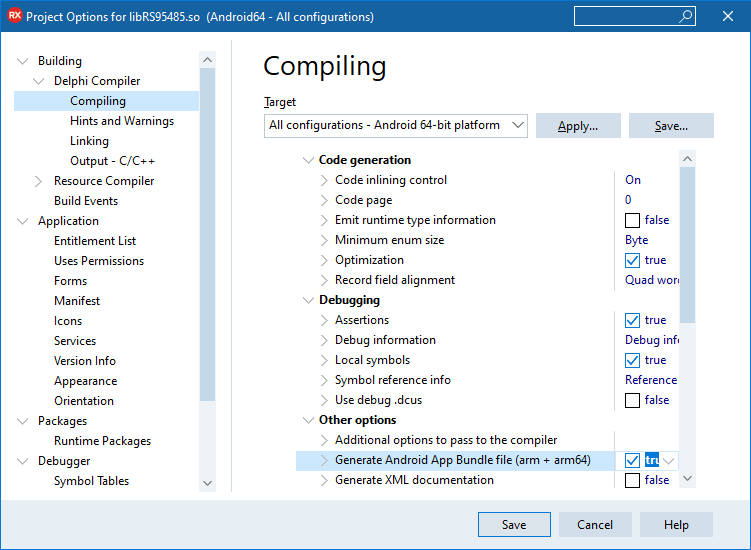
- Navigate to the Building > Delphi Compiler > Compiling options.
- Select All configurations - Android 64-chip platform equally the active target.
- Enable the Generate Android App Bundle file (arm + arm64) option.
-
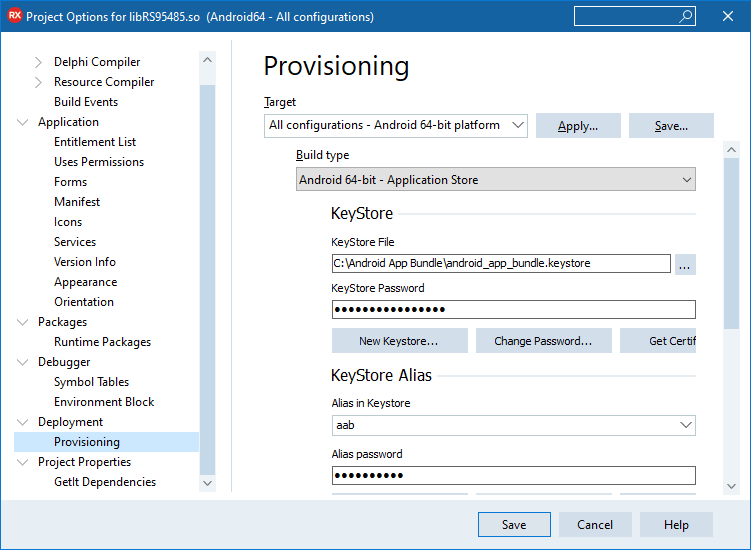
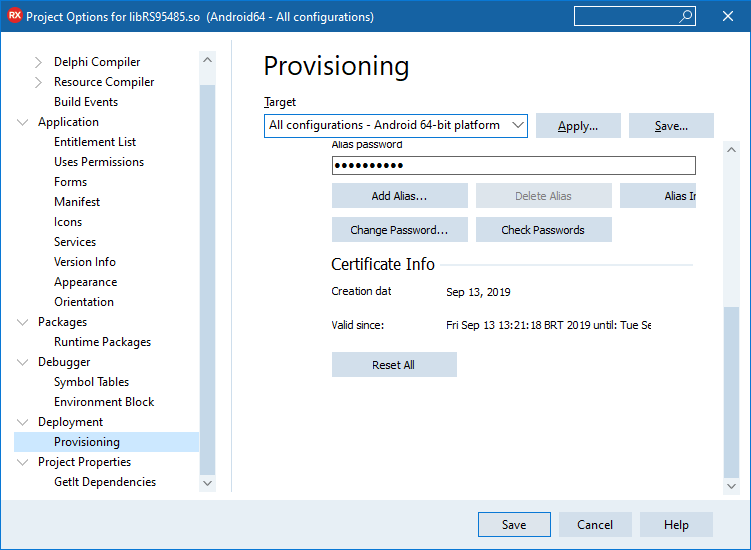
- Navigate to Deployment > Provisioning options page.
- Select All configurations - Android 64-bit platform equally the agile target.
- Fill the data about the key used to sign the application.
-
- Run the application with or without the debugger. (Or alternatively, build and deploy the application).
- Running the application with or without a debugger has the benefit of displaying the resulting message.
Note: You can not run or debug an App Package. To debug the application you have to utilise .APK package format for each platform separately (32-fleck and 64-chip).
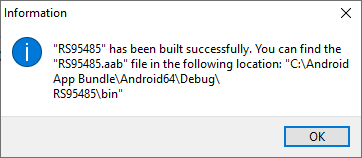
Upon a successful app packet generation, the IDE presents a dialog containing the .aab file path.
The generated .aab file is signed and set to upload to the Google Play Console.
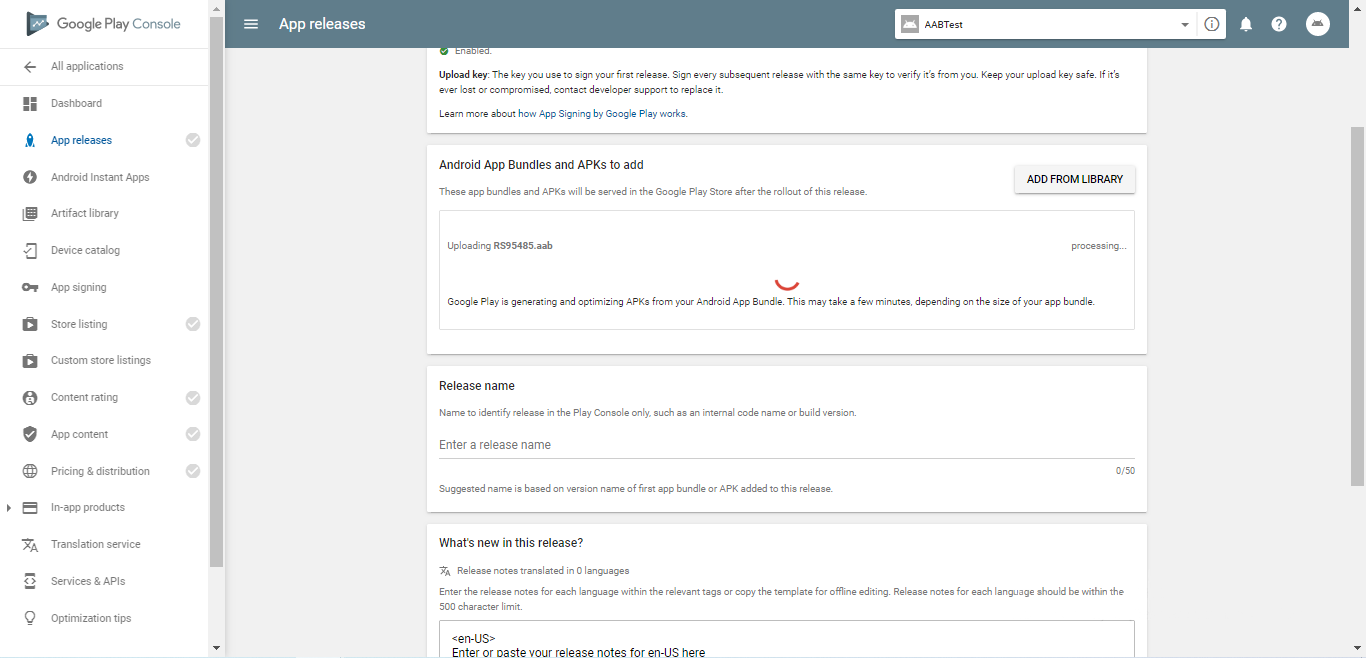
Once the file is generated you can upload it to the Google Play Panel.
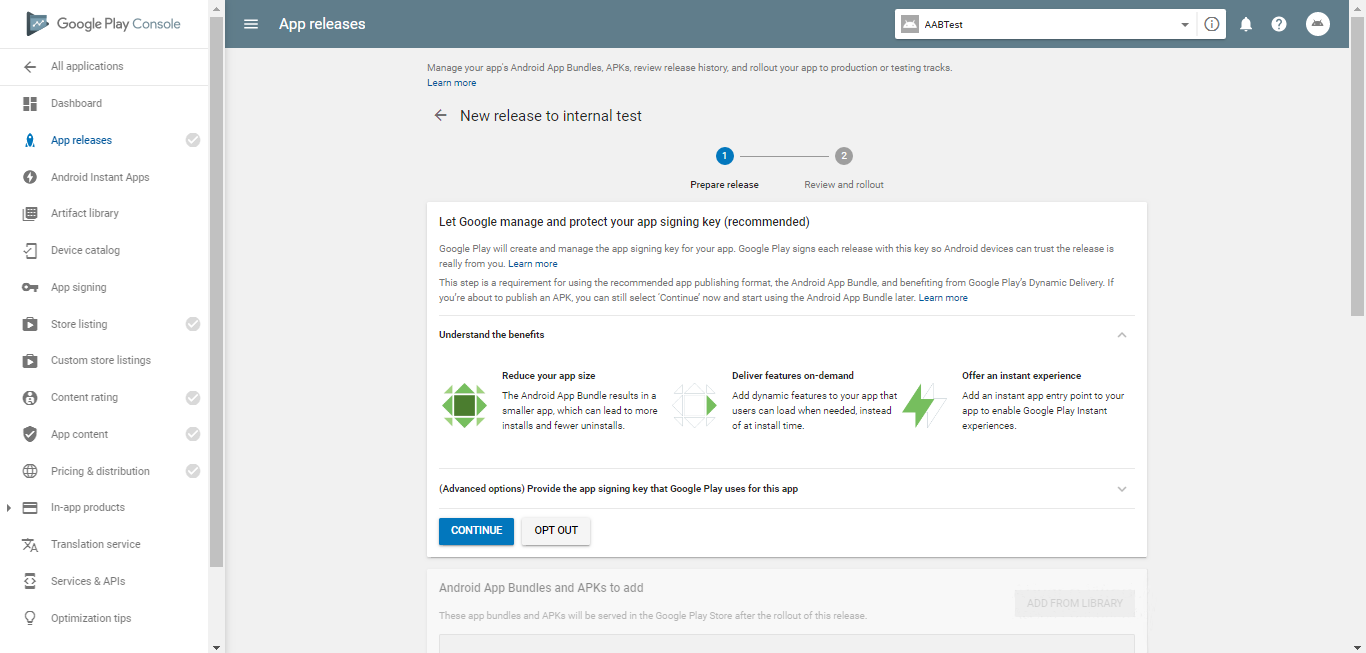
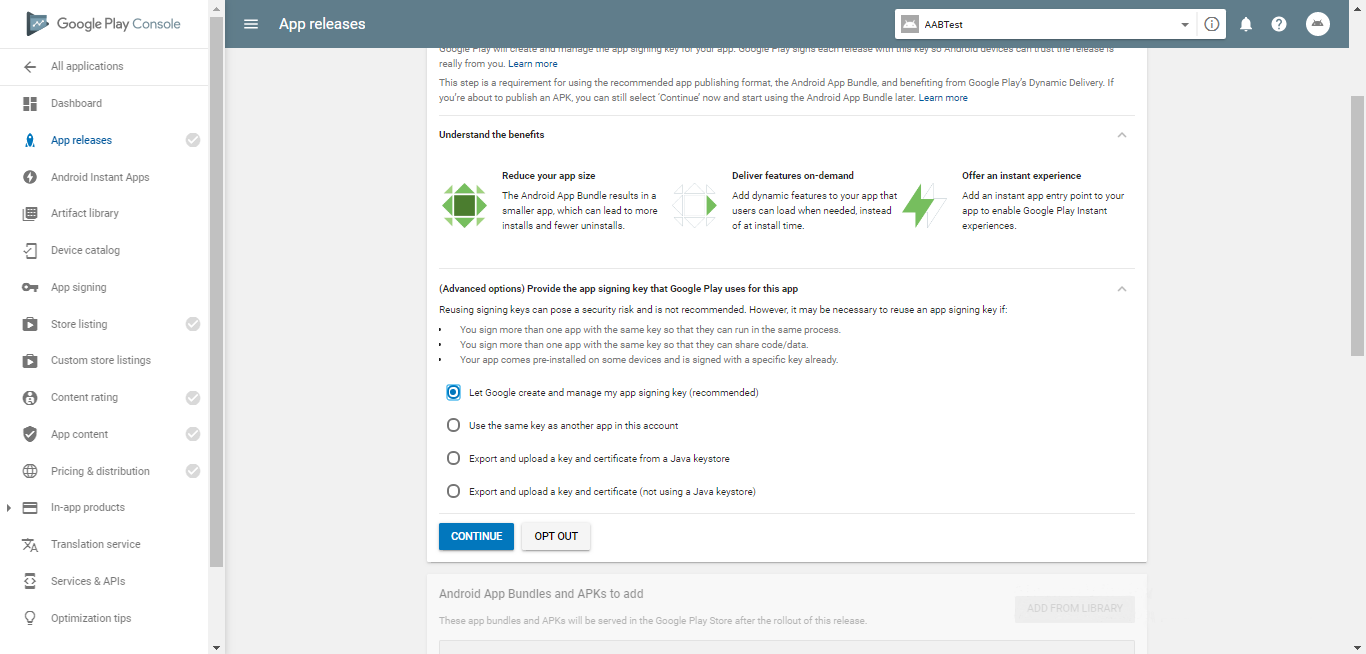
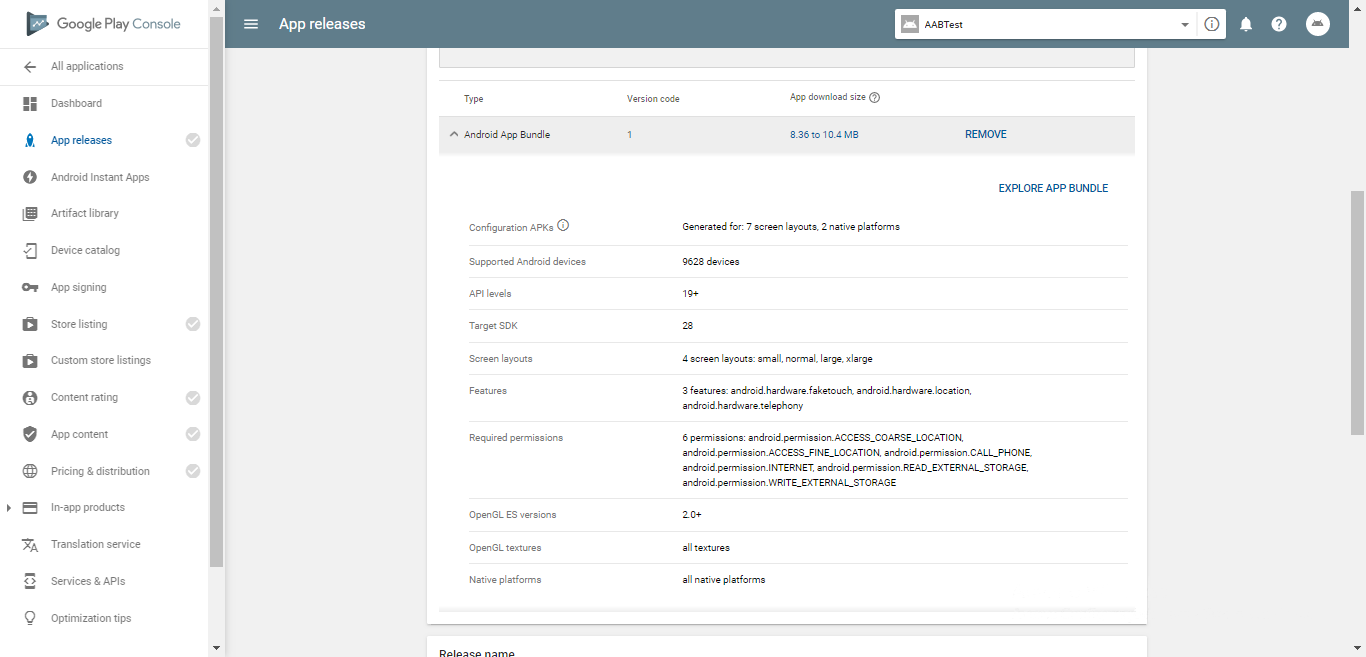
For more information virtually how to opt into awarding signing past Google Play (mandatory when uploading app bundles) in a new or an existing awarding, you tin can visit: https://developer.android.com/studio/publish/app-signing and https://support.google.com/googleplay/android-developer/answer/7384423
Sharing APK'south though App Bundle
Before RAD Studio 10.4.2, the combination of the Android 64-scrap target platform and the Application Store build type was used to generate APKs that supported but 64-bit devices. Yet, sharing APKs that supported only 64-scrap devices turned out to be quite frustrating for developers because of unsuccessful attempts to install these APKs on 32-bit devices or to install 64-bit devices with a 32-chip version of the Android operating arrangement.
Up to RAD Studio x.4.2, for local or internal testing it is possible to generate a Universal APK from an App Bundle to quickly share an application. Below you tin can notice the command lines for unlike cases:
- Generate a Universal APK (contained into an 'APK set up') from an App Packet:
coffee . exe - jar '<BDS-PATH>\bin\Android\bundletool-all-1.ii.0.jar' build - apks -- fashion = universal -- bundle =< ABB - FILE - PATH > -- output =< APKSET - FILE - PATH > -- ks =< KEYSTORE - FILE - PATH > -- ks - laissez passer = laissez passer :< KEYSTORE - PASSWORD > -- ks - key - alias =< Allonym > -- cardinal - pass = pass :< ALIAS - Countersign > - Install the Universal APK extracted from the generated APK set on the connected device:
java . exe - jar '<BDS-PATH>\bin\Android\bundletool-all-one.2.0.jar' install - apks -- apks =< APKSET - FILE - PATH > -- adb =< ADB - FILE - PATH > See Also
- Deploying Your Signed Android Application
- Distributing Your Multi-Device Apps
- Upload applications, Google Play
Source: https://docwiki.embarcadero.com/RADStudio/Sydney/en/Submitting_Your_Android_App_to_Google_Play
0 Response to "How to Upload Apk File to Android Developer"
Post a Comment